
The Scalloped Hammerhead Shark
Sphyrna lewini
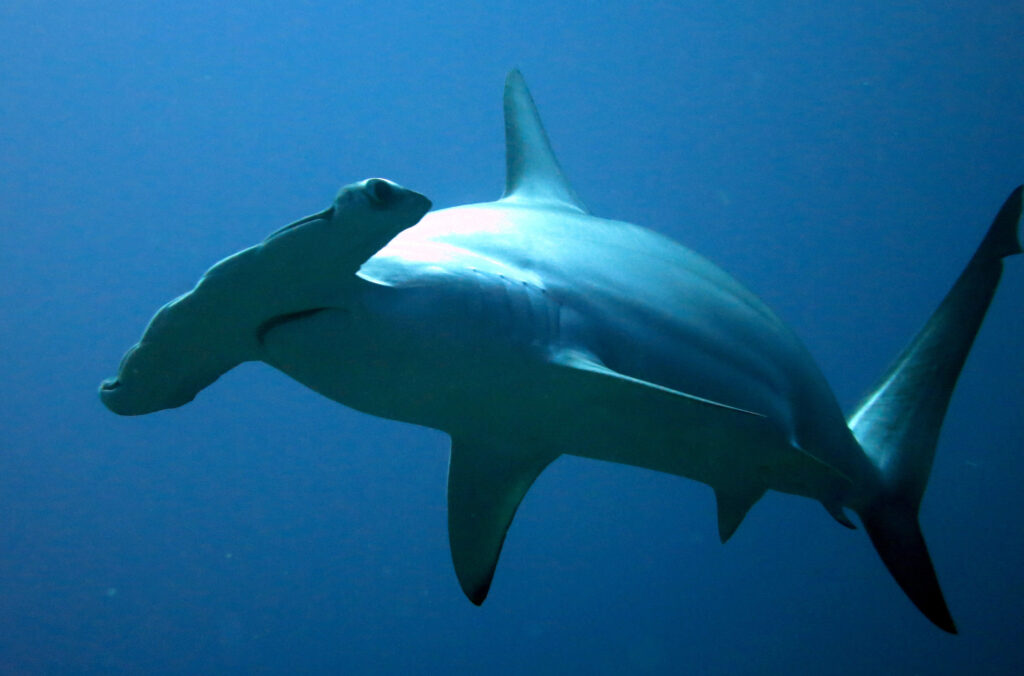
Known for their strange hammer shaped heads, hammerhead sharks are among the most widely known shark families. Scalloped Hammerheads in particular, get the scalloped part of their name from the arched, bumpy notches that they have on their cephalofoils(hammerhead) which somewhat resemble the shape of a scallop . These bumpy notches are also one of the easiest ways to identify them from other hammerhead species. Scalloped hammerheads can also be identified by a light gray or bronze like color on the topside and a white color on their underside; they also have black-tipped pectoral fins.
They are found in oceans worldwide in tropical and temperate seas and prefer habitats near continental and insular shelves near deeper water. They can be found deep into the sea but often stay closer inshore in mid-water, especially younger individuals. They are highly migratory, with females traveling to coastal areas to give birth, in which the more vulnerable juveniles will stay in the safer shallow waters. They have very large litter sizes of up to 12 to 45 pups.
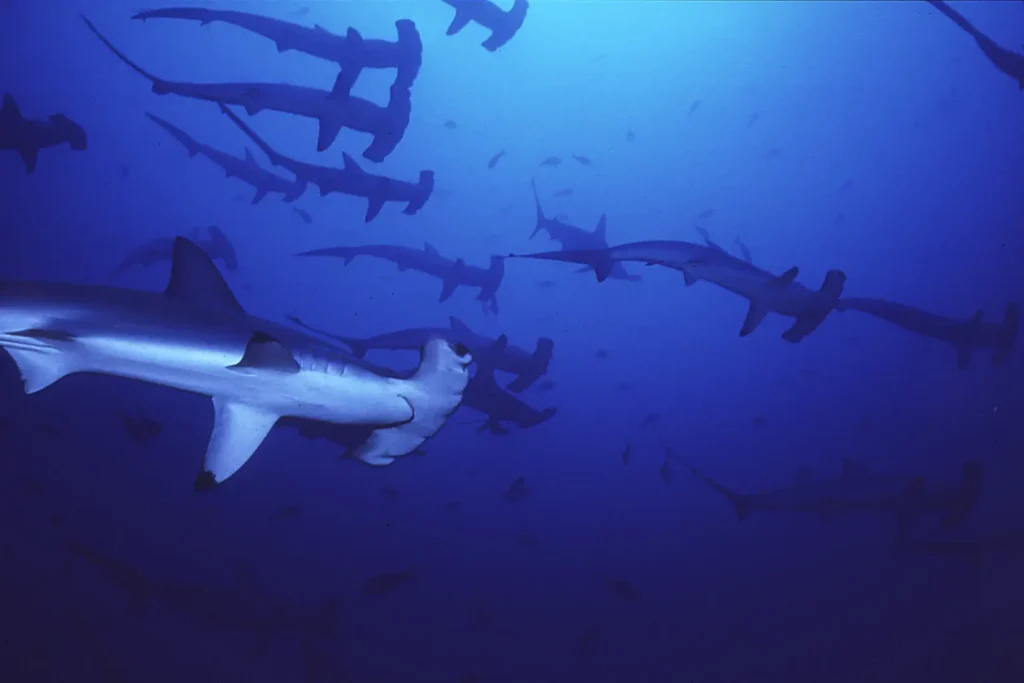
These sharks are also known for their fascinating schooling behavior. During the day, these sharks will often congregate in large, complex, social groups of up to 200 to 500 individuals. Scientists aren’t entirely sure why they do this but it’s been suggested that this serves a role in mating, as well as being a social refuge during daylight hours.
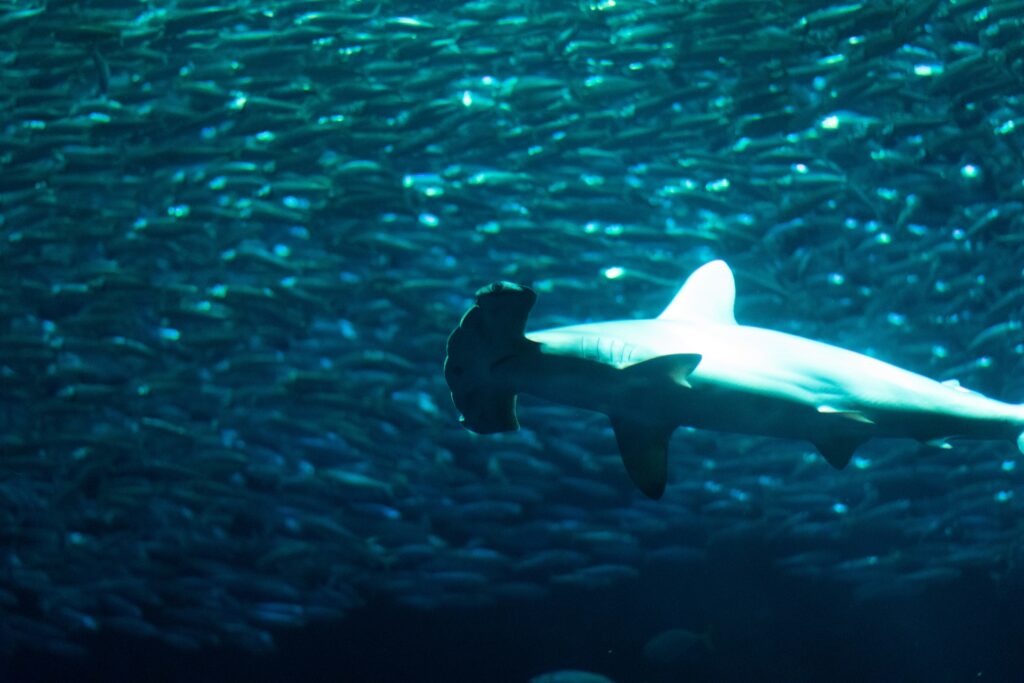
During night these schools will split up to hunt prey items. Scalloped Hammerheads will prey on things such as bony fish, other sharks, rays and squid. The broad shape of their heads help increase the range of their sensory organs, and can even aid in finding prey buried beneath the sand.
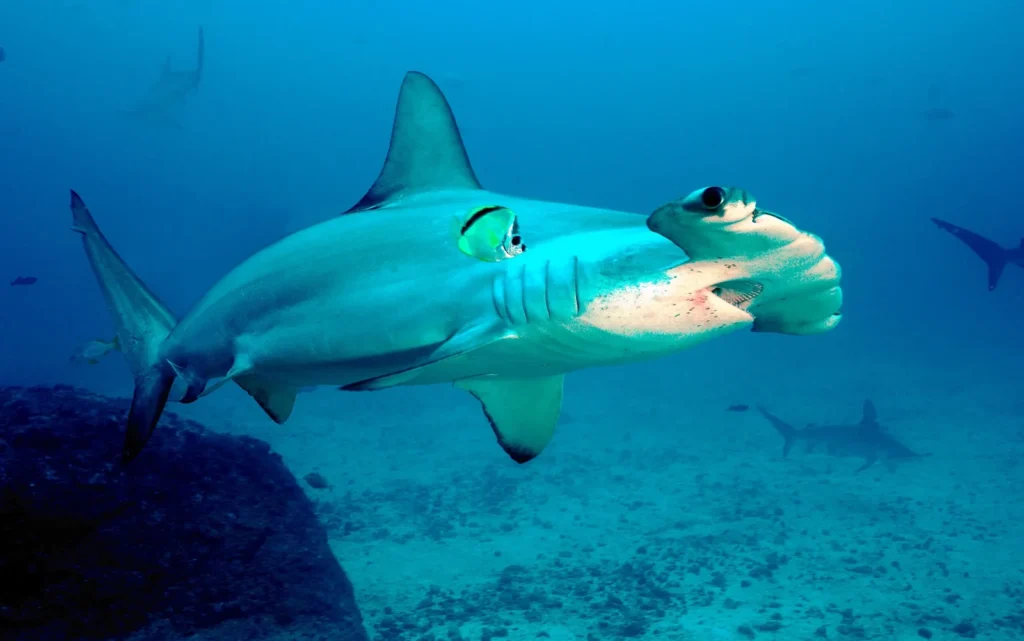
Scalloped Hammerheads can grow up to 14 ft long but are more averagely around 6 to 8 ft long. They are also considered quite skittish and shy, being easily spooked by divers. Unfortunately, Scalloped Hammerheads are threatened by commercial fishing, especially the shark fin trade in which they are particularly vulnerable because of their schooling behaviors. Their populations have declined in all oceans and are listed as critically endangered.