The Salmon Shark
Lamna ditropis
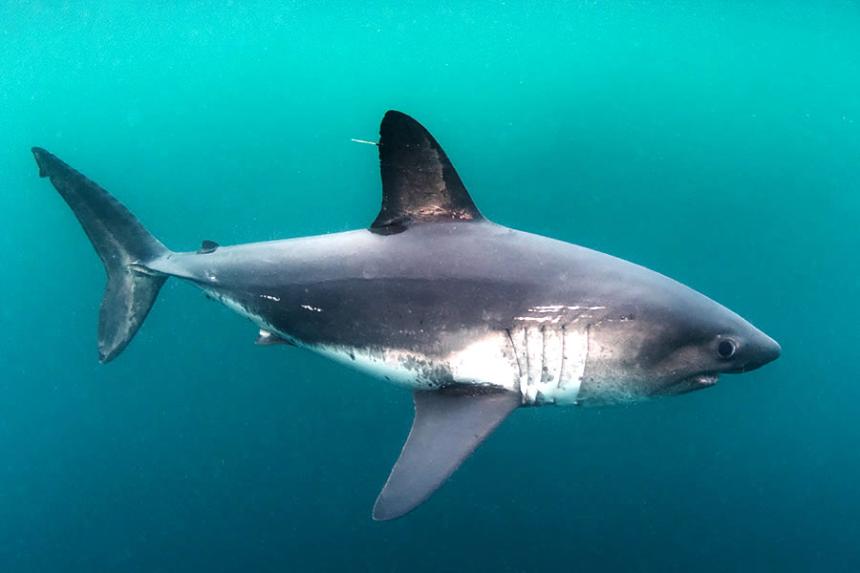
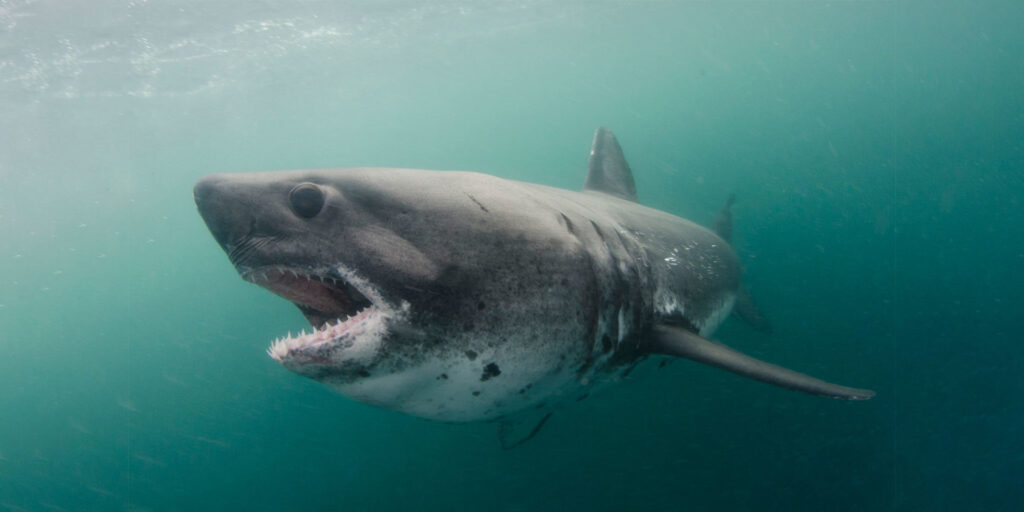
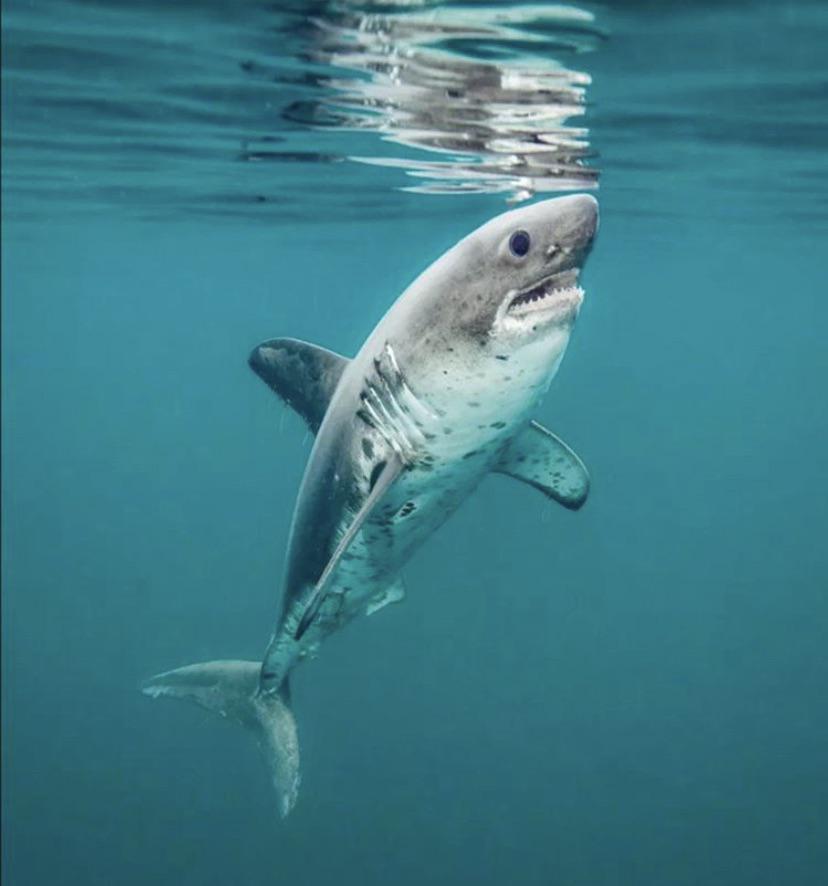
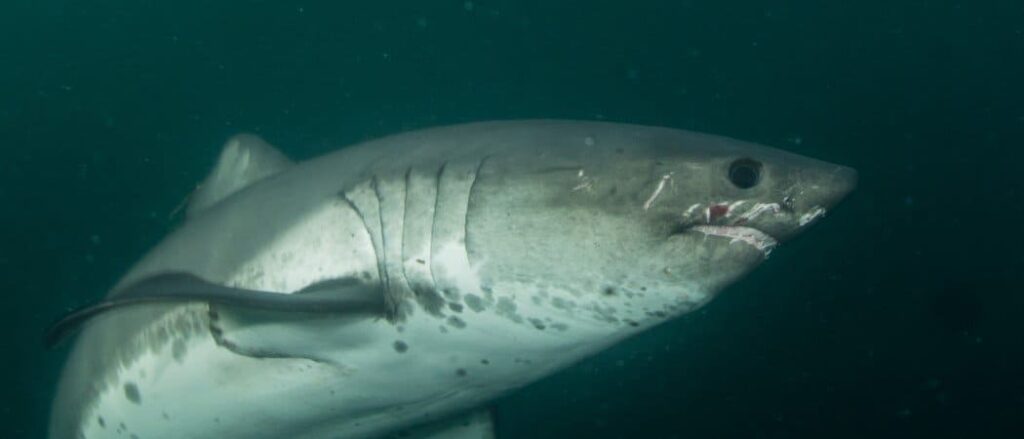
Named after one of their preferred prey items, Salmon Sharks are native to the North Pacific Ocean in cold, temperate, and sub polar regions. They have long gill slits with heavier bodies and short snouts. These sharks are also dark bluish gray or bluish black on their topside and white on their underside with blotches of gray.
Adapted for colder waters, Salmon Sharks are very good at maintaining their body temperatures and are capable of keeping a body temperature 14 to 20 degrees Fahrenheit above the ambient water temperature. These higher body temperatures enable them to actively hunt prey in colder water.
Salmon Sharks primarily feed on schooling fish such as herring, sardines, and of course, salmon but will also feed on squid and benthic crustaceans. Also, these sharks can aggregate in groups of 30 to 40 individuals while hunting for prey, they will also even leap out of the water in pursuit of prey. They have a reputation as voracious feeders, but despite this there is little data regarding how much these sharks actually eat in a given period.
Salmon Sharks can have litters of up to 2-5 pups that are born in nursing grounds during the spring. In terms of size, Salmon Sharks reach an average of around 6.5 to 8 ft long but can reach a maximum size of around 10 ft.
The Salmon Shark is also highly migratory and will often segregate based on sex and size, with larger individuals being seen farther up north. Often competing with Salmon Sharks, some commercial salmon fishermen will kill them because of the threat they pose to their livelihood.