
The Great White Shark
Carcharodon carcharias
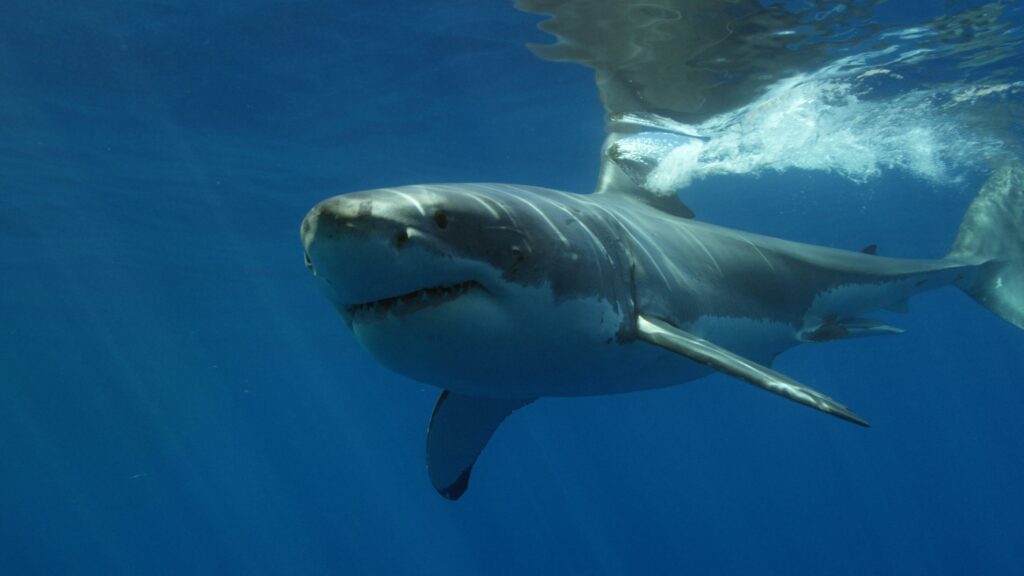
One of the most recognized and famous shark species in the world, the Great White Shark is an apex predator and one of the most powerful and formidable animals in the ocean. Among the most widely distributed shark species, Great White Sharks are found in all cold temperate and tropical waters worldwide. They will inhabitat coastal and offshore areas, they have also been found near oceanic islands; they will also move towards shallow bays and other shallow water while also being found at depths as 4,100 ft deep. They are also commonly found in the vicinity of pinniped(seals and sea lions) colonies.
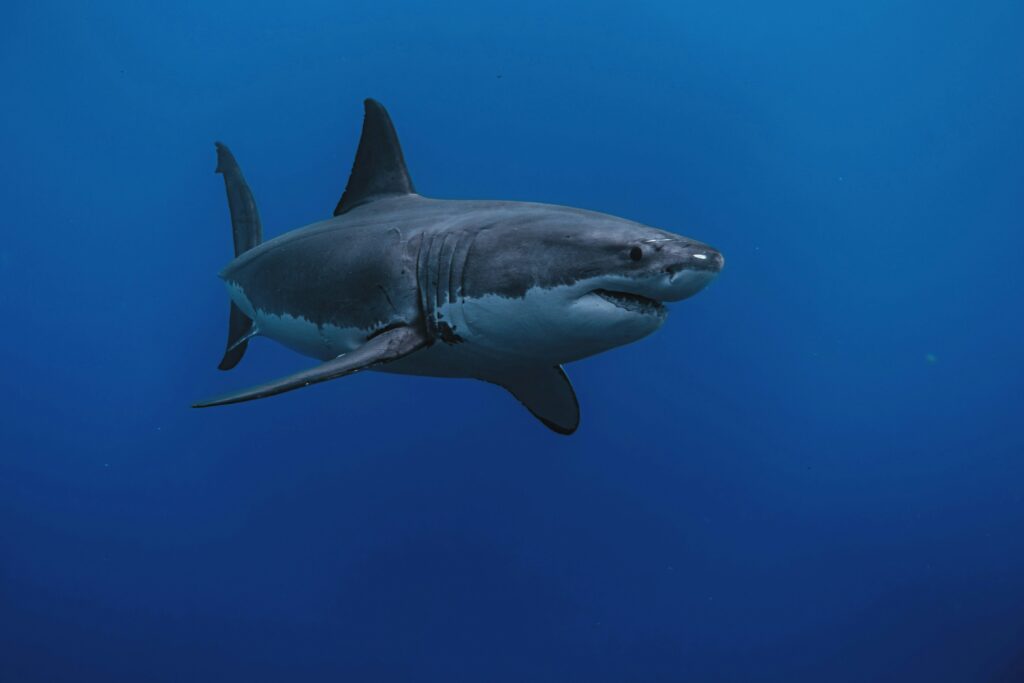
Great White Sharks will migrate heavily and are quite elusive. This means that despite their popularity, there is still much unknown about these sharks, especially in regards to their reproductive cycles. What is known is that their litter sizes range from 2-10 pups and possibly to 17, the exact time for gestation is not known but could be over a year. Great Whites are easily identified by a large torpedo shaped body, conical snout, and a crescent shaped tail. The undersides of these sharks are consistently white while their upper body ranges from gray to black or gray brown.
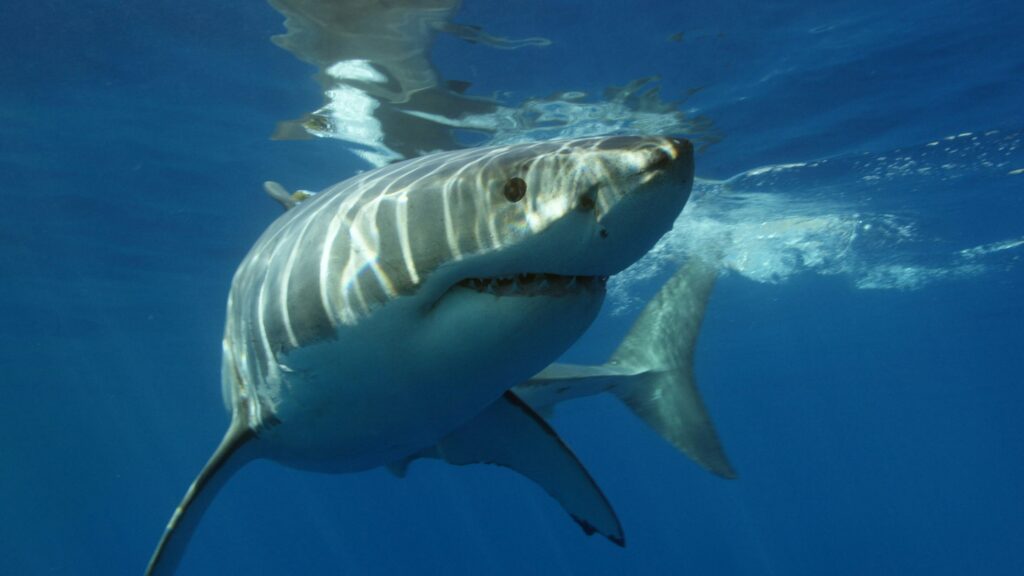
One of the largest predatory shark species in the world, Great Whites will grow to an average of around 15 ft long with a max length of at least 20 ft long and possibly even larger at 26 ft long. Great Whites are warm bodied(not warm blooded) animals that can maintain a body temperature that is as much as 14 degrees Fahrenheit above the ambient water temperature. This allows the sharks to exploit food resources in colder environments.
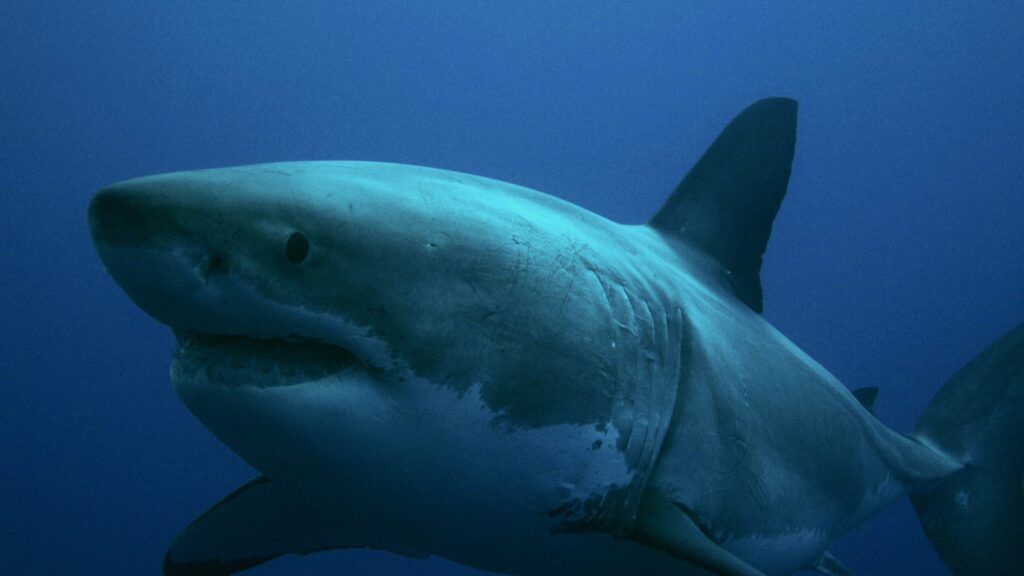
They are well equipped predators and will hunt a variety of prey, including various species of bony fish, other sharks, seals, sea lions, dolphins, sea turtles, seabirds, and mollusks; they are also known to feed off dead whale carcasses. Great Whites have very large olfactory bulbs, one of the largest of any shark species. This grants them a great sense of smell that greatly improves their ability to find seal colonies and other potential prey. Great Whites also have keen eyesight that allows them to discern finer details and colors, they will even engage in a behavior called spy hopping. In which the sharks will raise their heads above the surface of the water to get a better look at something. They are frequently seen performing this behavior when in the vicinity of seal colonies. Their eyesight is limited in darkness and they probably rely on their other senses to hunt at night.
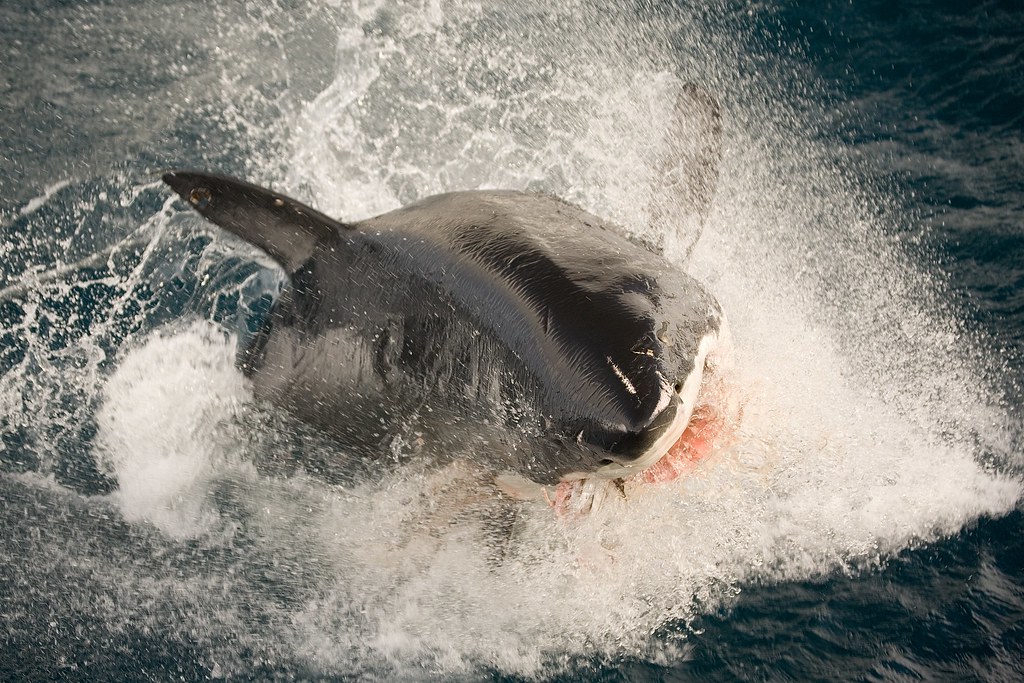
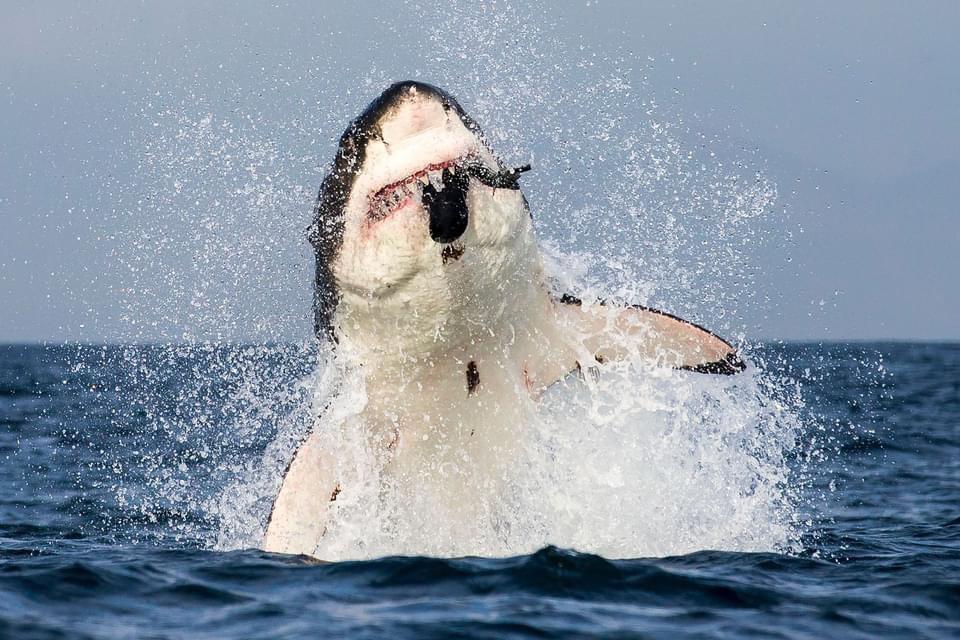
Great Whites are known to hunt pinnipeds by waiting in deeper water until a one is spotted, upon which they will race towards the surface at speeds of up to 25 mph and strike their target from below, performing spectacular breaches out of the water. They can reach several feet into the air during these displays, with the highest recorded breach being 15 feet out of water and into the air. The teeth of Great Whites are prominent triangular with heavily serrated edges. The teeth on the bottom jaw are narrower and will help hold prey in place while the saw-like teeth of the upper jaw rip off chunks of flesh.
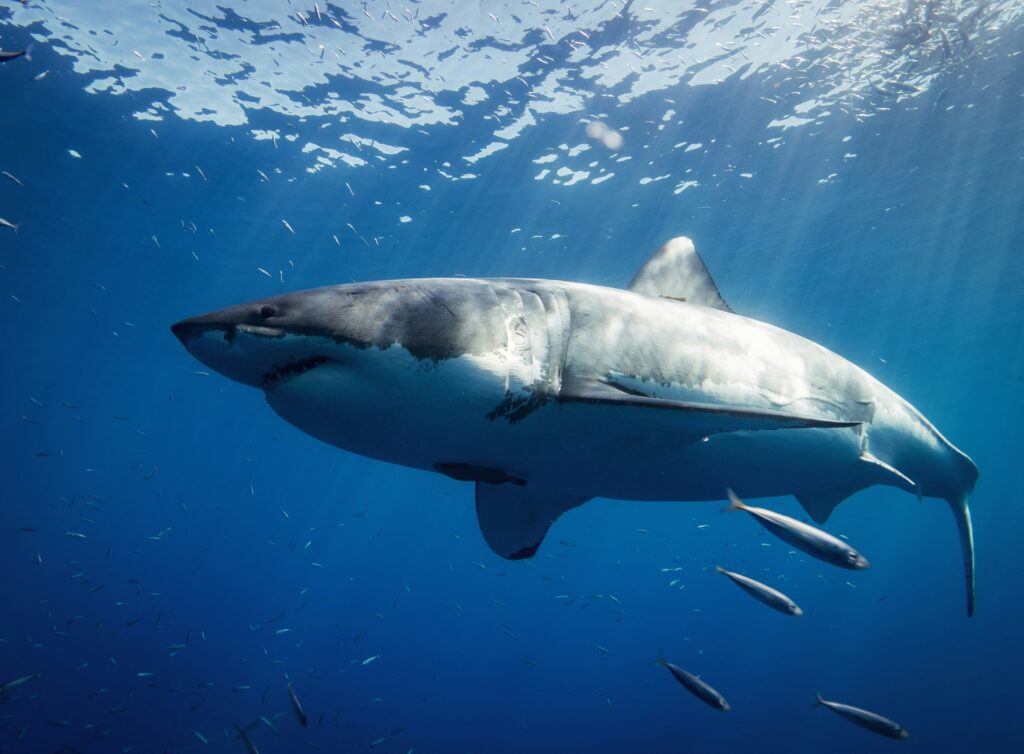
Great Whites tend to be very curious animals and most attacks on humans seem to stem from this curiosity, rather than a desire to feed. Because of their key role to the ecosystem as apex predators, Great White Sharks are listed as a protected species in various countries around the world.