The Lemon Shark
Negaprion brevirostris
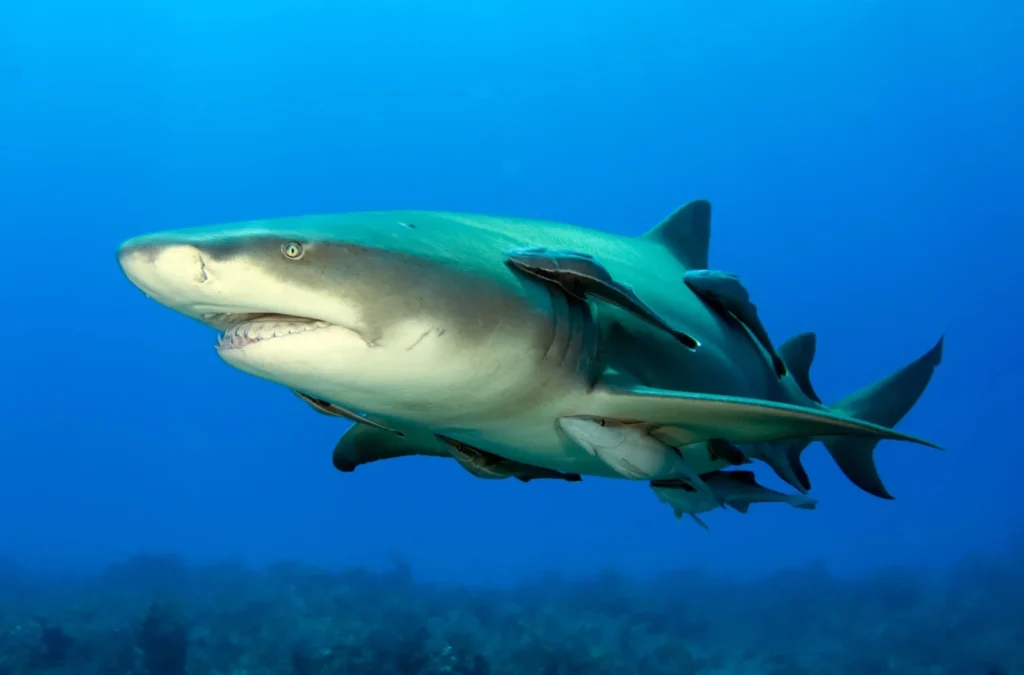
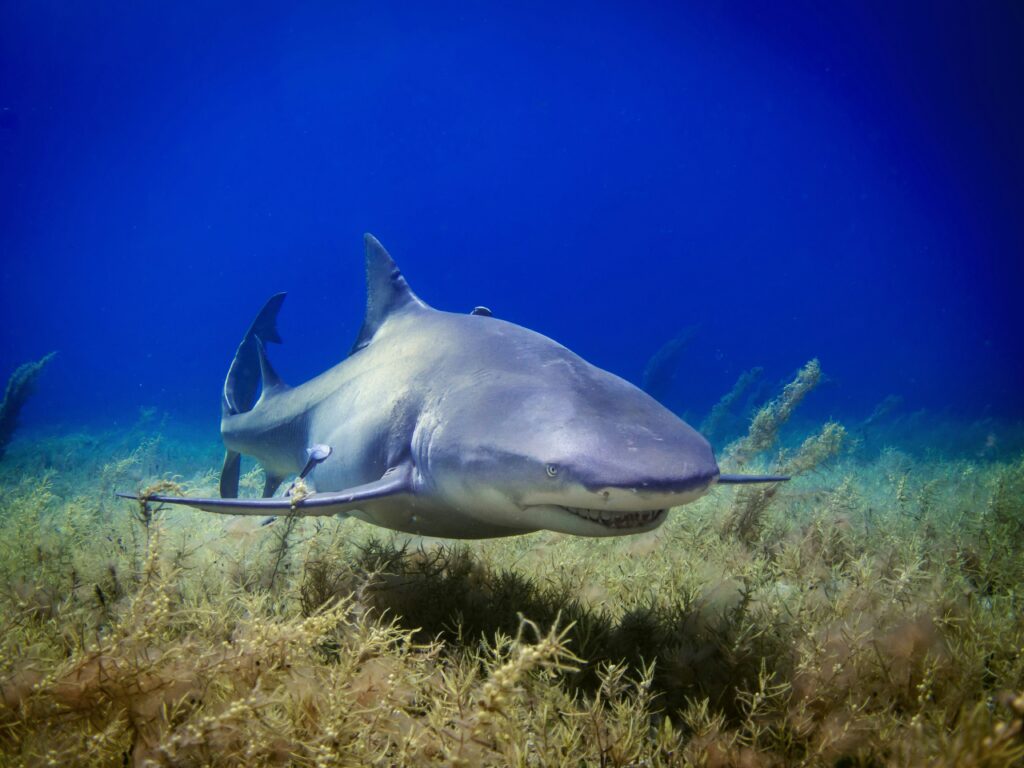
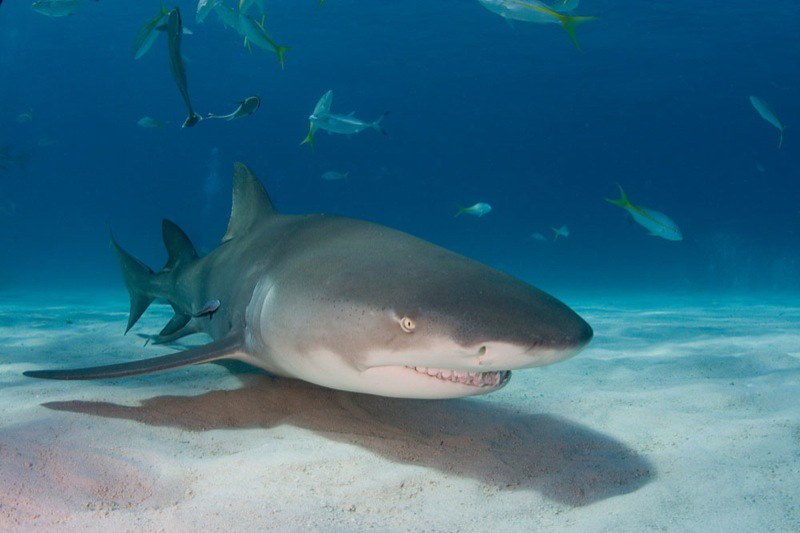
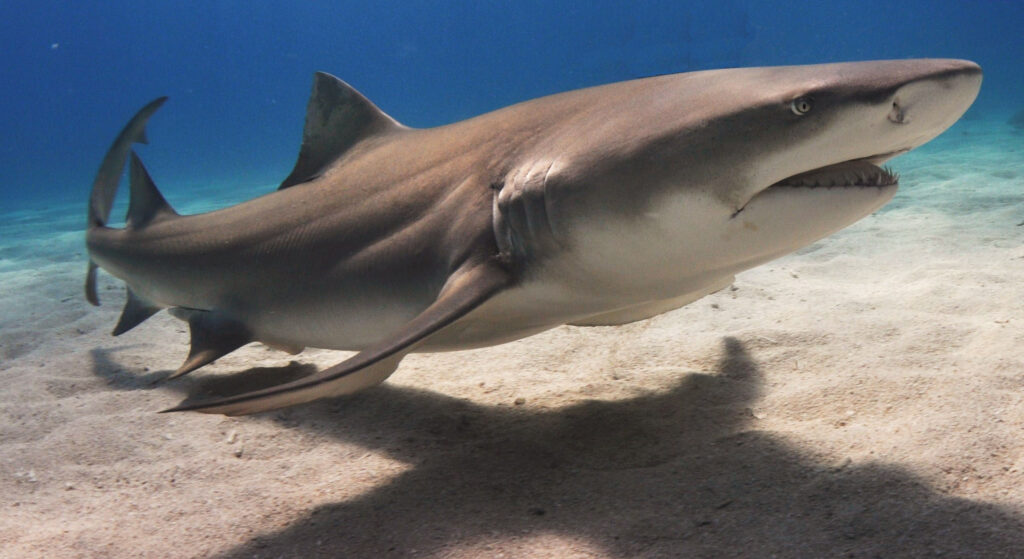
A species of Requiem Shark, Lemon Sharks are named after their yellowish hue and are one of the most well studied shark species. Lemon Sharks prefer inshore habitats in shallower water near intertidal zones in depths of about 300 ft. They are distributed along the West Atlantic Ocean from New Jersey to southern Brazil and in the East Atlantic along the west coast of Africa; They can also be found in the tropical eastern Pacific Ocean.
Although they are often seen as a yellowish brown color they can also be seen as a dark brown or olive color. One of the Lemon Sharks most distinctive characteristics is a pair of dorsal fins that are nearly the same size.
Lemon Sharks have litters of up to 4 to 19 pups that are known to grow up in tropical estuaries such as mangrove swamps that serve as a safer habitat for the more vulnerable juveniles. With the food rich mangroves, the sharks will feed often and grow rapidly increasing their size by about 3 to 4 inches in their first year. When full grown, adult Lemon Sharks can reach sizes of up to 11 ft in length.
Lemon Sharks will also tend to gather in groups of about 12 individuals. The teeth of Lemon Sharks are smooth and narrow, aiding them in catching slippery fish species. Lemon Sharks feed on fish, other sharks, rays, crustaceans, mollusks, and occasionally sea birds. They are also among the shark species that can breathe without moving. Also, they are believed to be able to live up to 30 years in the wild. Lastly, despite their eyesight not being the best, Lemon Sharks have vertical-slit pupils that help them see various levels of light.