The Zebra Shark

Stegostoma fasciatum

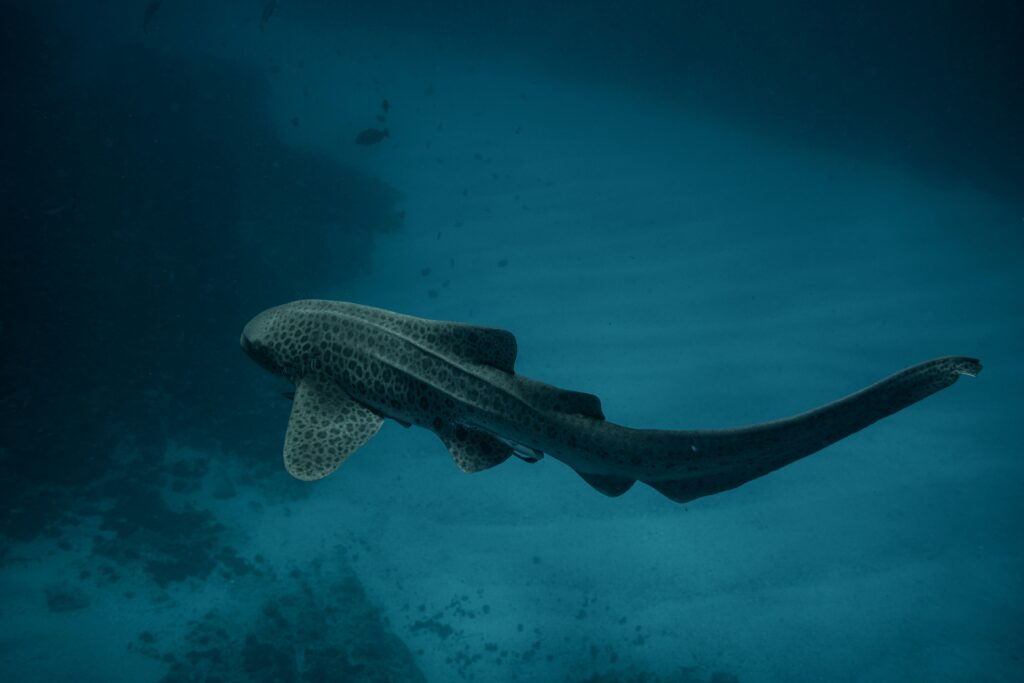
A relatively docile and fascinating shark species, Zebra Sharks are a species of carpet shark. They are found in the tropical and subtropical waters of the Red Sea, and off coastal areas in the west Pacific and Indian Oceans. They inhabit shallow water at depths of around 200 ft and will live in coral and rocky reefs. With juveniles being found in deeper water than adults. Most Zebra Sharks reach an average of 8 ft long but can reach sizes of up to 11 ft, in many cases their very distinguishing elongated caudal fin takes up almost half of that length.

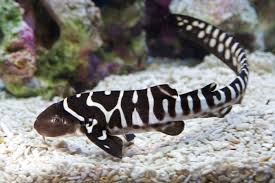
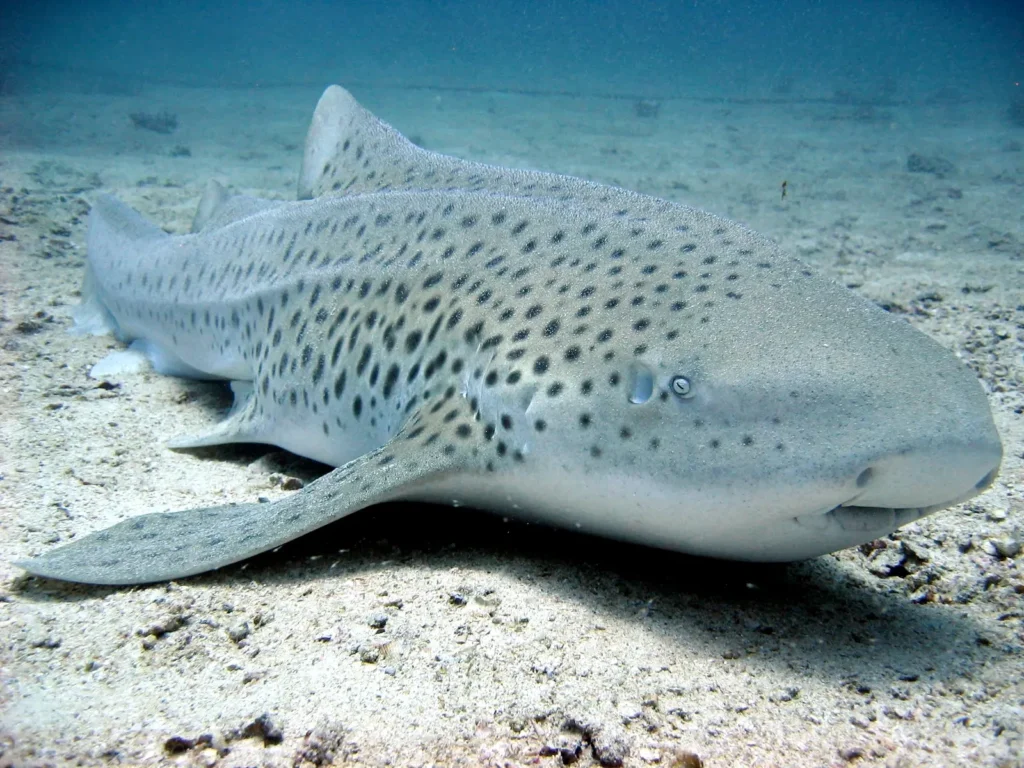
Adults also have noticeable ridges that run along the sides of their body. Zebra Sharks will lay dark brown to purple eggs that adhere to the bottom with tufts of fiber. They get their common name of Zebra Shark from juvenile individuals who possess white zebra-like stripes along their body. It is believed that juveniles developed their stripes as a form of mimicry, as their stripes and elongated body make them resemble venomous banded sea snakes, helping to deter any potential predators. When the shark grows into an adult they will adopt a tan coloration and their stripes will fade into dark leopard-like spots along their entire body. These spot patterns on adults are unique to each shark and can be used to identify specific individuals.

Zebra sharks tend to be popular in aquariums due to their more docile nature. These sharks are mostly solitary but may form groups of up to 20 to 50 individuals. They are more sluggish by day and tend to be seen resting on the bottom pulling water over their gills through buccal pumping.

Zebra Sharks primarily feed on mollusks, crustaceans, and small fish. They become more active during nighttime and will use their flexible, slender bodies to hunt in narrow and tight areas in their reef habitat. These sharks also possess barbels on their snouts to help them search for prey hidden in sand or in other camouflaged places. Zebra Sharks can also create a large amount of suction with their mouths to pull in prey towards their jaws. Lastly, these sharks are one of the few shark species documented to be able to reproduce asexually.