The Greenland Shark
Somniosus microcephalus
Although the cold, polar seas of the Arctic are less habitable for sharks, the Greenland Shark is one of the species that has conquered those frigid waters. Fairly large and sluggish, Greenland Sharks are a species of sleeper shark. They are typically found in the colder waters of the North Atlantic and Arctic oceans, distributed from the surface to at least 7,000 ft deep.
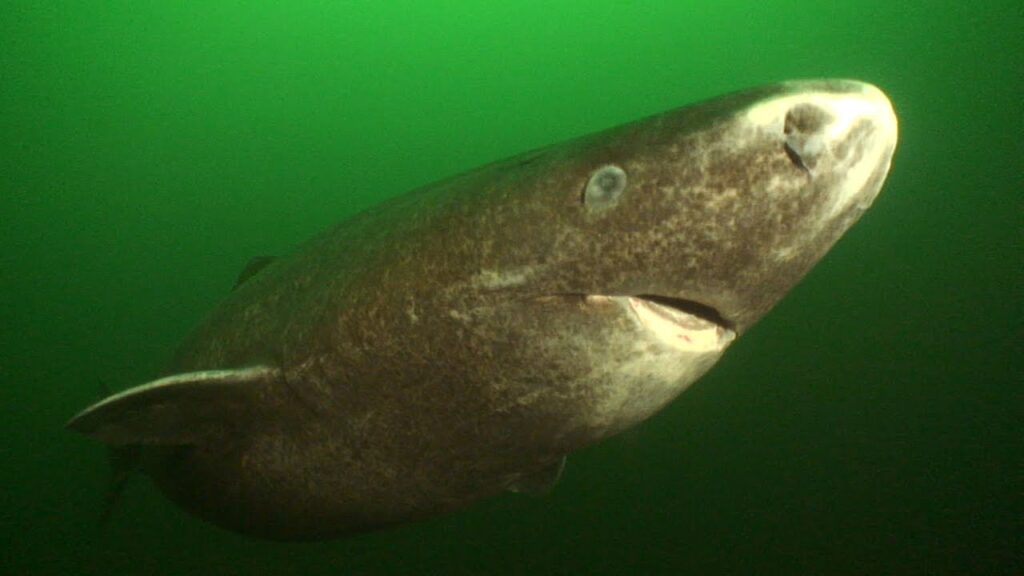
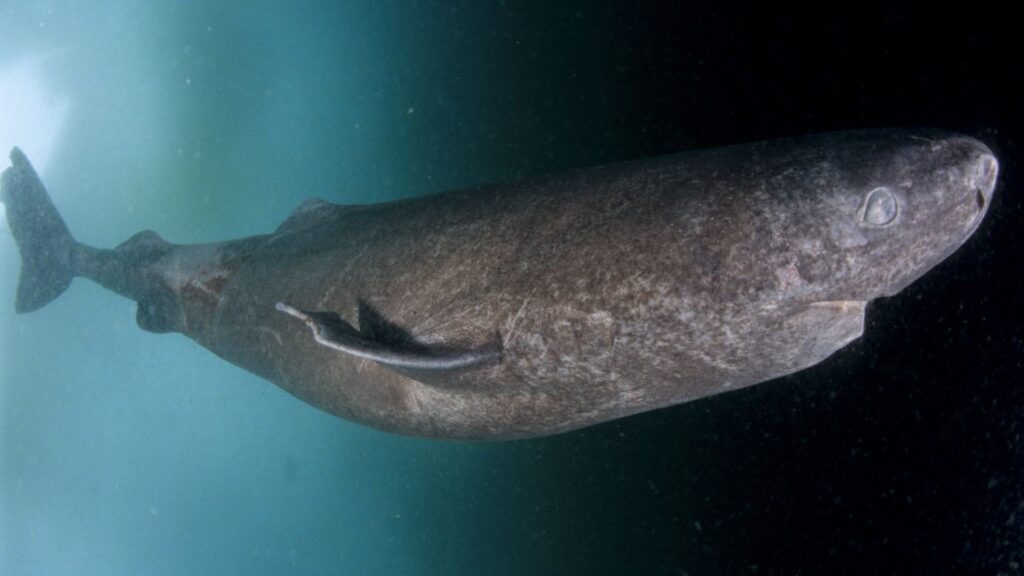
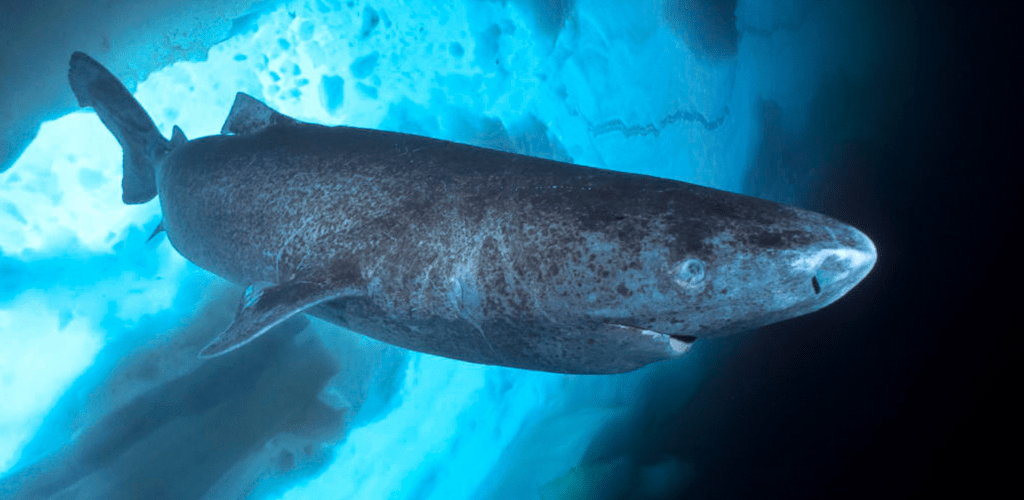
Greenland Sharks can be identified by a short, round snout, a cylindrical tube-like body, and relatively short fins. Their color can be observed as gray or brown and sometimes having dark bands and spots. They can grow to be quite large, reaching sizes of up to 21 ft long and possibly 24 ft with most adults being closer to 8 to 14 ft.
Greenland Sharks are very slow moving but they are also very slow growing. In fact, they are very likely to be the longest living vertebrates on the planet, estimated to be able to live up to 272 years long and possibly even centuries longer. Greenland Sharks have a high concentration of trimethylamine N-oxide(TMAO) in their flesh to aid in living in deeper environments, this makes the shark’s meat poisonous unless it is properly prepared before being eaten.
Greenland Sharks are opportunistic predators and scavengers and the prey found in their stomachs has included various invertebrates, various species of fish, seabirds, other Greenland Sharks, whale blubber, reindeer, seals, and even polar bears. Although they appear very slow most of the time, it is believed that they are capable of short bursts of speed to catch prey by surprise.
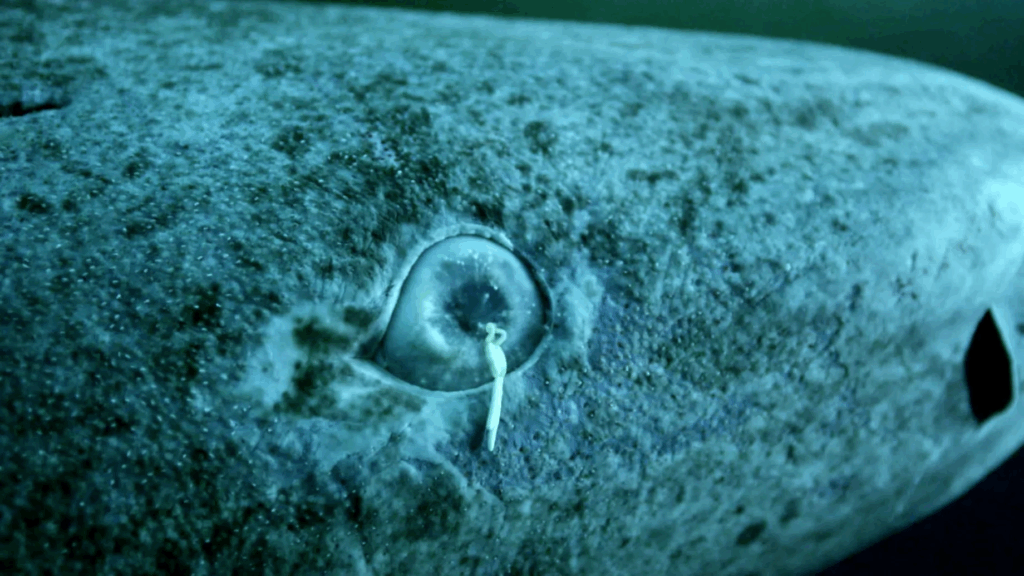
A good amount of these sharks are afflicted with a copepod parasite(Ommattokoita elongata) that attaches itself to the shark’s eye and causes severe visual impairment, however this does not seem to affect the shark’s ability to navigate or hunt prey. It is also even theorized that the parasite could even help lure prey towards the shark, though this has not been verified. They are considered harmless to humans, with no confirmed attacks towards people.