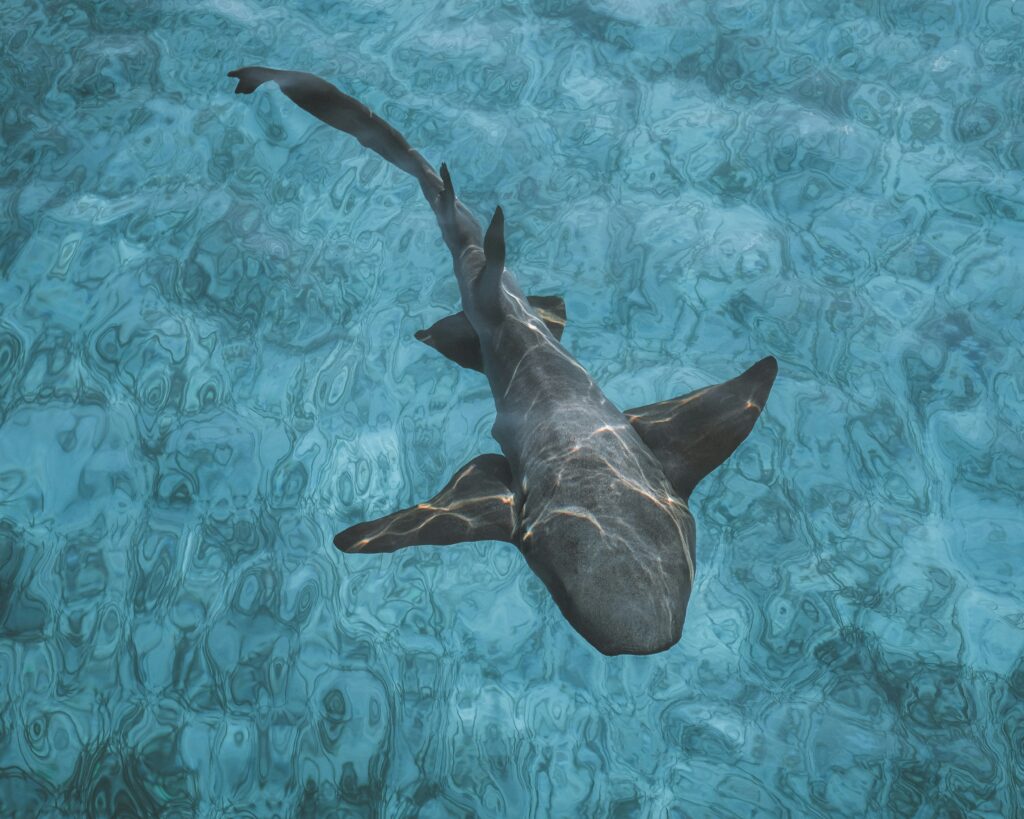
The Nurse Shark
Ginglymostoma cirratum
One of the most commonly encountered shark species. These more sluggish sharks are found in the western Atlantic from North Carolina to southern Brazil, as well in the eastern Atlantic along Africa’s west coast and in the eastern Pacific from Mexico to Peru.
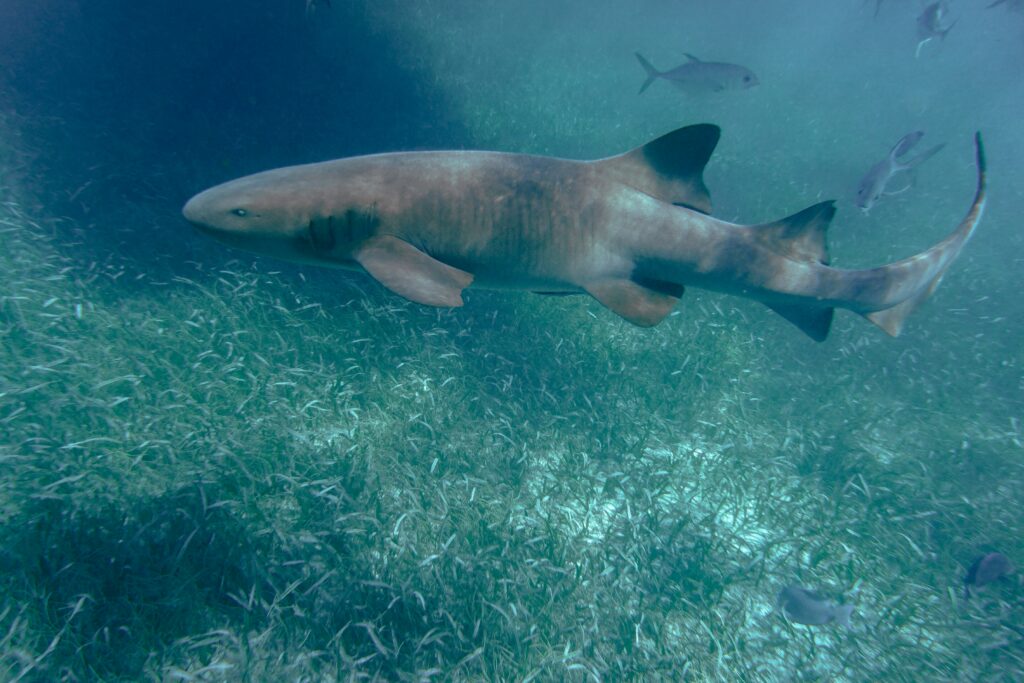
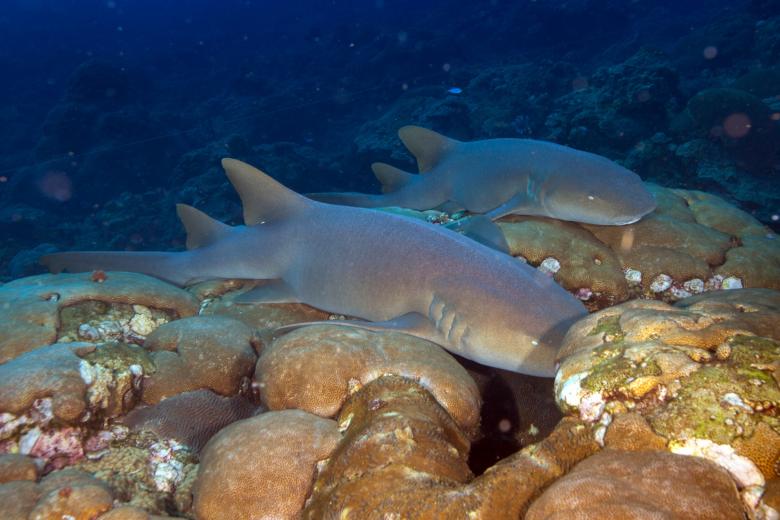
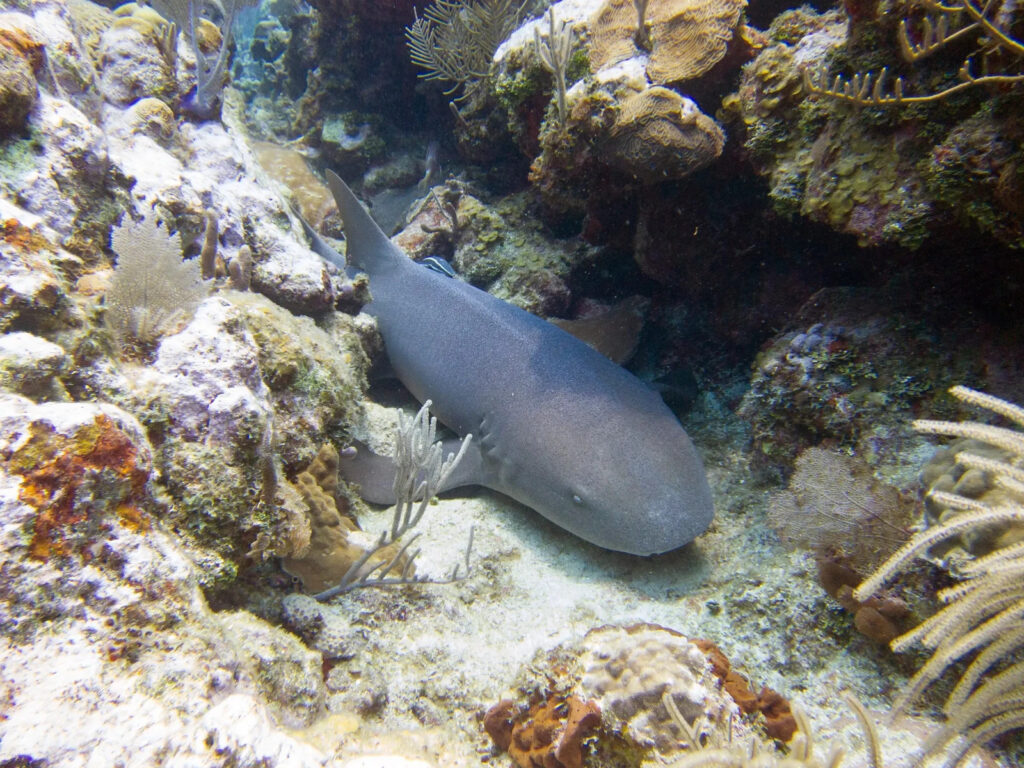
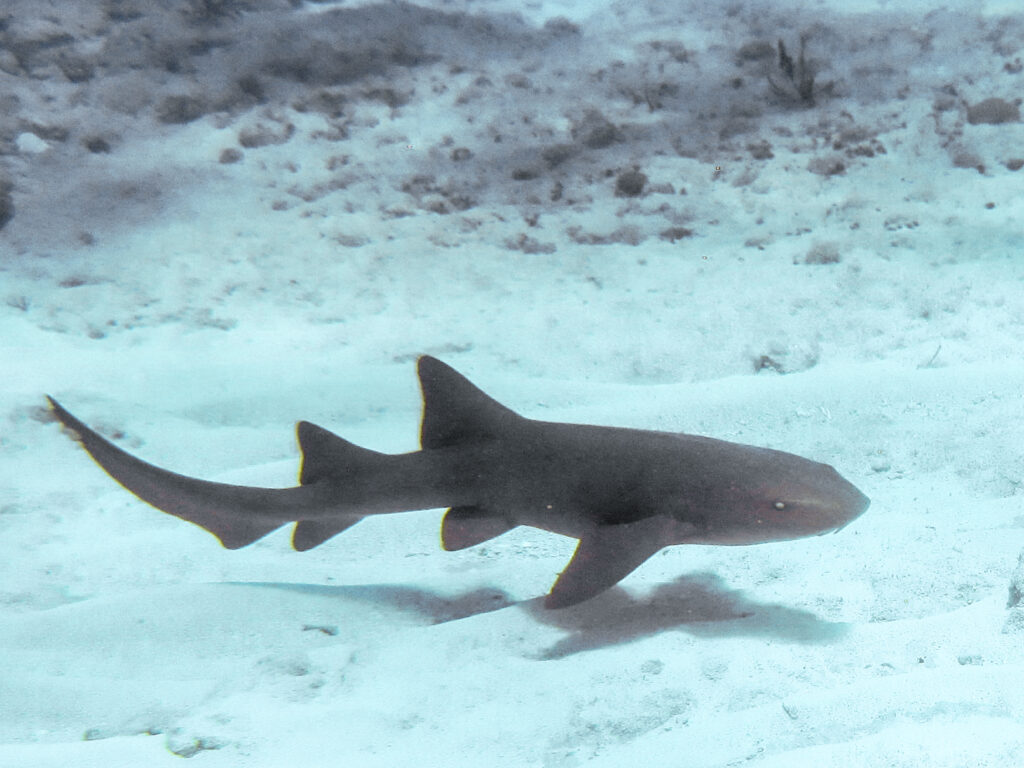
Nurse Sharks possess large heads with overall flatter bodies; they are brown, yellow brown, or gray brown in color. Nurse sharks are nocturnal and are more active during night. They are also very social and will often rest during the day in large groups packed together.
They are one of the few sharks that can breathe without moving, in a process called buccal pumping in which they will pump water over their gills to breathe manually. Becoming formidable predators at night, Nurse Sharks will feed on small fish and invertebrates such as crustaceans, octopus, squids, and bivalves. They are suction feeders and will use this method to pull in prey towards their jaws.
Despite being mostly docile, they will bite if agitated. Leading to a nasty habit of them refusing to let go if they’ve bitten a diver, often forcing those bit to be carried out of the water with the shark still attached. Although painful, there have been no human fatalities as a result of a Nurse Shark bite. Nurse Sharks are usually less than 10 ft in length but can reach a maximum length of 14 ft