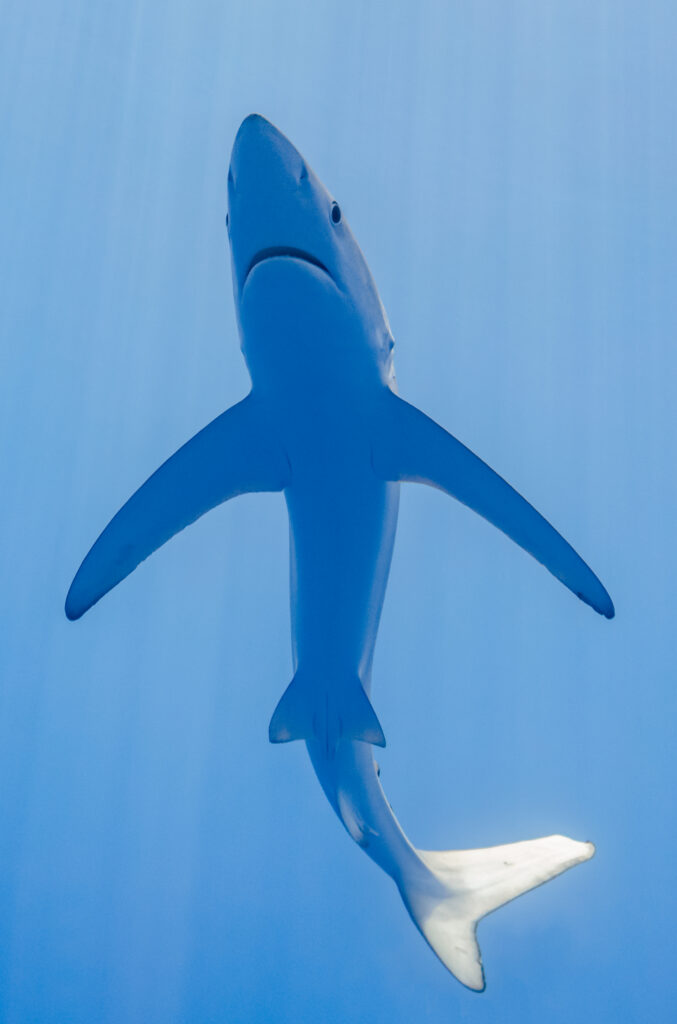
The Blue Shark

Prionace glauca

One of the most widespread shark species, Blue Sharks are known for slender bodies and a distinctive blue coloration. They also possess long pectoral fins, large eyes, and a long pointed snout. As mentioned, these sharks are very widespread and are located worldwide in tropical and temperate climates. They migrate heavily with very complex movements based around breeding cycles and prey availability. In fact, it is common for Blue Sharks to travel as much as 1,200 to 1,700 miles during migratory periods, with some of the longest recorded journeys being up to 3,700 miles long.


Generally they will feed on smaller prey, such as fish or squid but they are not above scavenging off of carcasses when the opportunity arises. A Blue Sharks gills are also equipped with gill rakers, an adaptation that prevents very small prey from escaping through the gills during feeding. This allows Blue Sharks to effectively feed on smaller invertebrate organisms such as krill.

Blue Sharks are capable of growing up to 10 ft long with males being smaller than females. The largest recorded Blue Shark was around 12.6 ft long. Unfortunately, Blue Sharks are the most fished shark species in the world, millions are caught annually primarily as bycatch. They are often targets of shark finning due to their large fins.