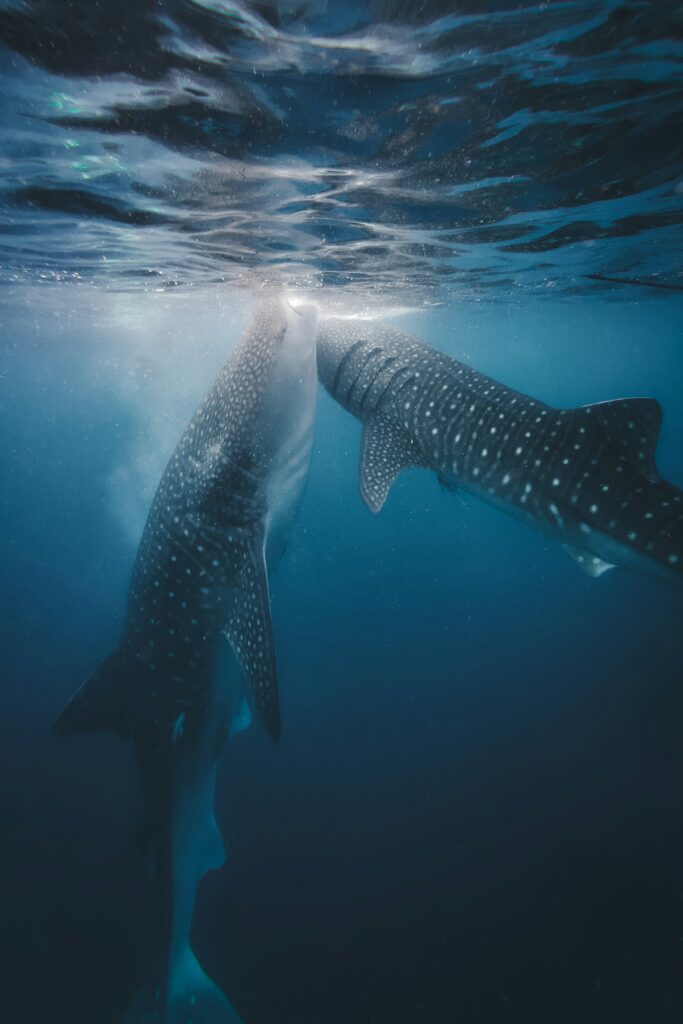
The Whale Shark
Rhincodon typus
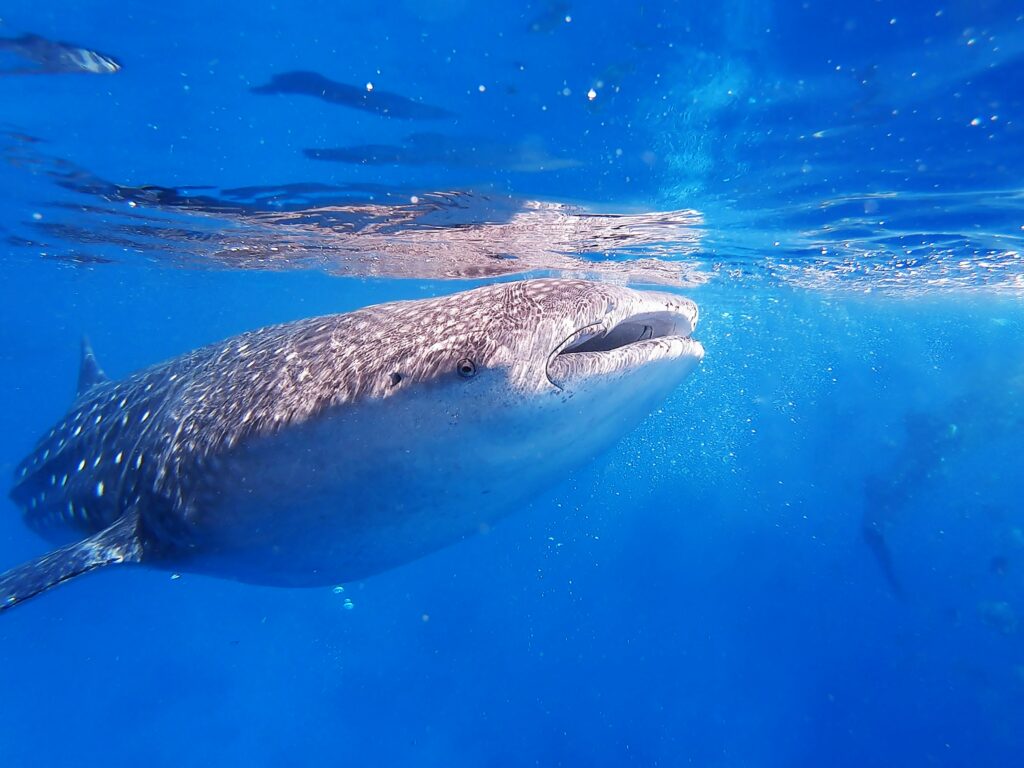
The largest living fish in the sea, and by extension, the largest extant species of shark, The Whale Shark is the living example of the phrase “gentle giant”. They get their name from their whale-like size and not because they are related to whales. Widely distributed, Whale Sharks are found in all tropical and temperate seas with the Mediterranean being the only exception. They inhabit the open ocean and also areas closer inshore such as coral reefs, islands, and off beaches.
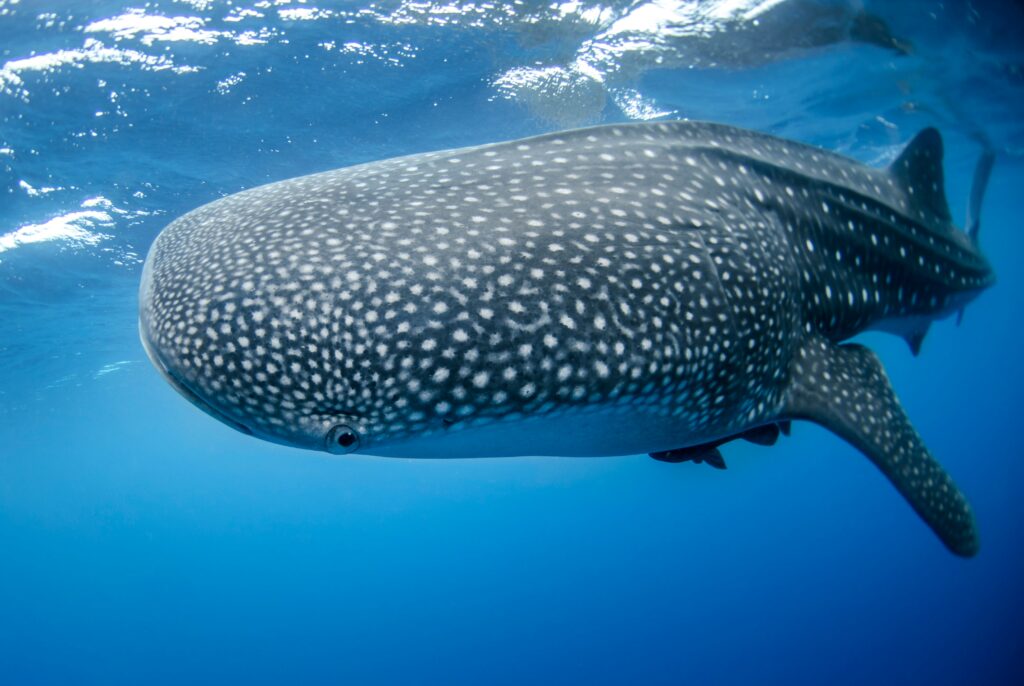
These sharks are massive, reaching 45 ft in length and possibly even up to 68 ft long. Even without their massive size, Whale Sharks are quite distinctly identifiable; they possess virtually no snout, very broad heads, and wide jaws that are around 5 ft in length, as well as prominent lateral ridges. Their topside is gray, bluish, or greenish brown and has a distinct pattern of white stripes and spots; their undersides are also white.
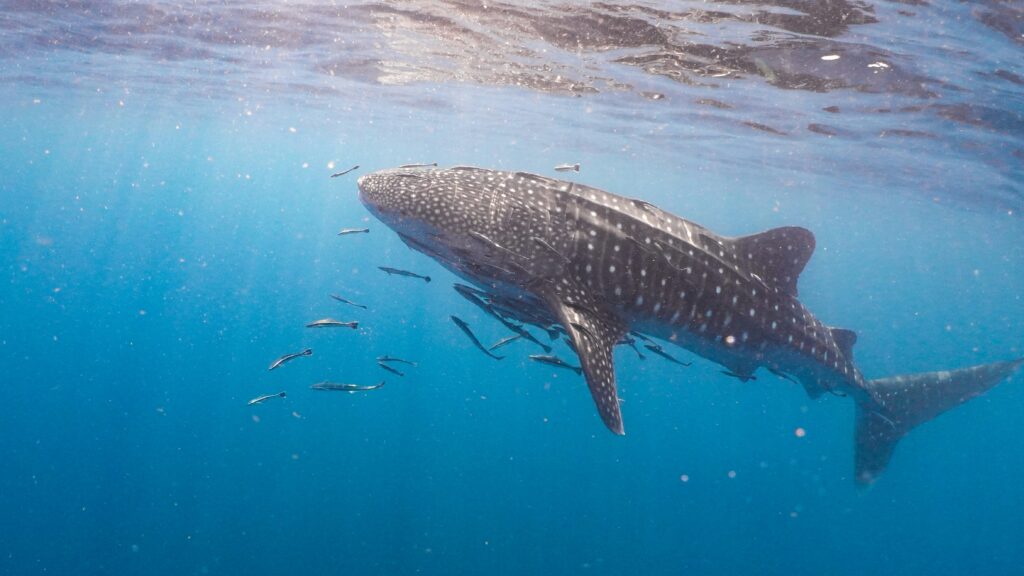
Despite their size, they will largely feed on much smaller prey and are among one of three existing species of primarily filter feeding sharks. To filter feed, Whale Sharks will use their strong jaw and gill muscles to pump food-bearing water into their mouth and can filter about 6,000 liters of water in an hour. Marine biologists are still unsure on how Whale Sharks locate microscopic food such as plankton, but it’s speculated that they could use their sense of smell. Whale Sharks also have teeth that are very tiny and numerous, numbering in the twenty seven thousands, however it would seem that these teeth no longer serve much of a purpose for the sharks anymore. While largely feeding on plankton and other microorganisms, they are not exclusively limited to that diet and will also feed on small schooling fish, krill, and squid. Phytoplankton, algae, and kelp has also been reported in Whale Sharks stomachs.

Whale sharks are also known to be migratory and will travel long distances across the ocean to reach areas with higher densities of food. One of the longest recorded journeys for a Whale Shark has been measured as traveling a distance of up to 8,000 miles. Whale sharks have large litters of to 300 pups because contrasting to their incredible size as adults, Whale Shark pups are very small only being about 16 to 24 inches at birth, naturally this makes them very vulnerable to predation and it’s likely that the large litter size is meant to compensate for a high mortality rate. While scientists are still uncertain as to why Whale Sharks have their distinctive white spots, it has been suggested that they could serve as camouflage or a tool to help juveniles confuse predators by grouping together and making them harder to target similar to a herd of Zebras. Due to their passive nature, Whale Sharks are practically harmless to humans and are only really potentially dangerous because of their large size. This gentle nature has unfortunately made them more vulnerable to exploitation.